Emergency guide
Emergency Water Mitigation: What to Do First
Emergency water mitigation is the first response after sudden water damage. This guide walks through safety, stopping the source when safe, what to document, how the first 24 to 48 hours usually go, and how to talk with a local water damage company and your insurer.
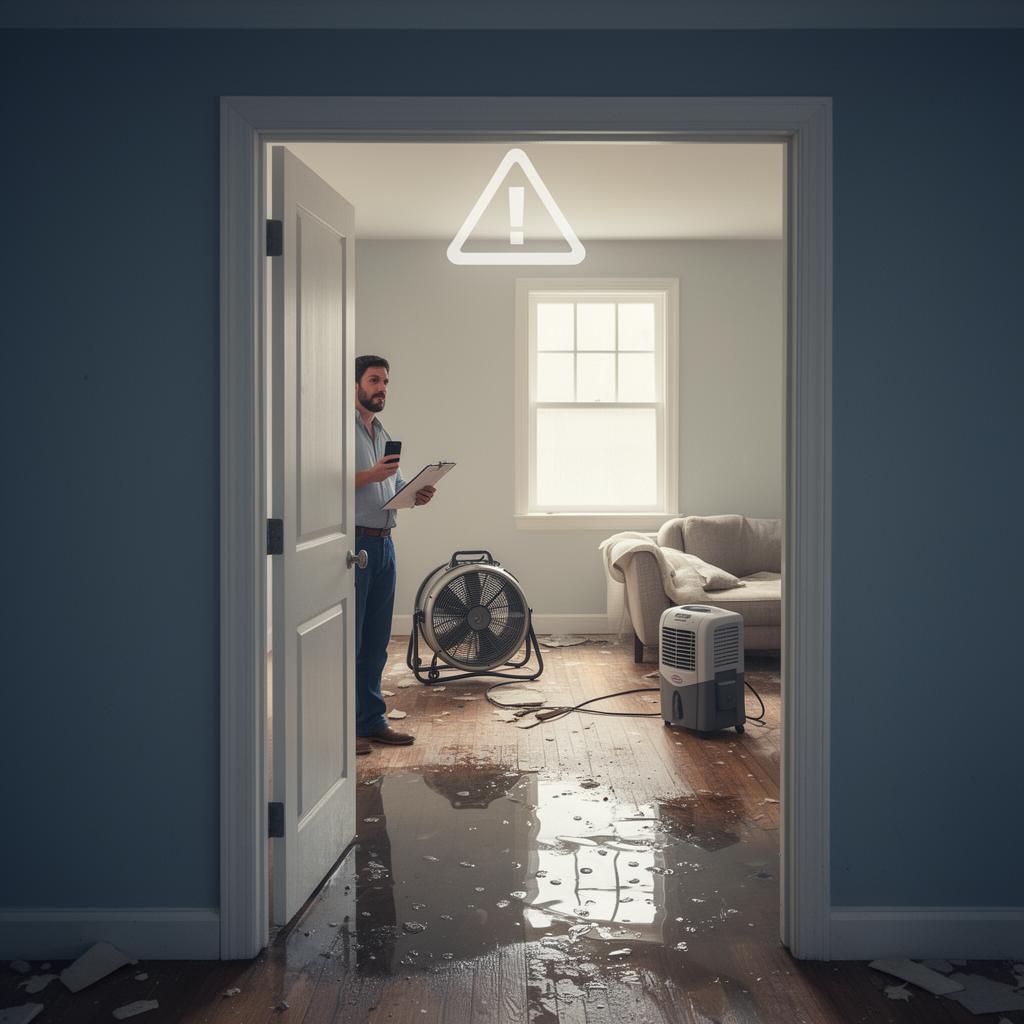
What this page is, and is not
What should you do first during a water damage emergency?
When sudden water damage starts, the goal of the first few minutes is simple: stay safe, stop the water source when it is safe, and protect the documentation that supports a clear scope and an insurance claim. The short list below is the same order most homeowners can follow.
- 1Stay out of unsafe areas.
- 2Stop the water source if it is safe to do so.
- 3Avoid electricity and standing water.
- 4Take photos and videos of the damage.
- 5Move valuables only if it is safe.
- 6Contact your insurance when damage looks significant.
- 7Call a qualified local water mitigation company for active damage.
When to Leave the Area and Get Help Immediately
Some situations are not safe to enter, even briefly. If any of the conditions below are present, stay out of the affected area and call a qualified professional. When the situation involves immediate danger, call 911.
Leave the area and call for help when you see:
- Standing water near outlets, breaker panels, or appliances.
- Sewage backup or any visible waste in the water.
- A gas smell anywhere in the home.
- A sagging or bulging ceiling.
- Active flooding that is still rising.
- Contaminated outdoor floodwater coming in from outside.
- Signs of structural movement, such as new cracks or shifting.
- Unsafe access, including blocked exits or unstable stairs.
- Children, older adults, or health-sensitive people in the affected area.
American Red Cross disaster cleanup guidance emphasizes safety first and avoiding unsafe conditions. When something looks unsafe, treat it that way.
Emergency Water Mitigation Action Plan
Use the table below as a quick reference for common emergency situations. Each row pairs the first step you can take with a clear reminder of what to avoid.
| Situation | What to do first | What to avoid |
|---|---|---|
| Burst pipe | Shut off the main water valve if you can reach it safely, then photograph the source and affected area. | Do not stand in water near outlets or appliances while the area is still active. |
| Flooded basement | Stay at the top of the stairs, check for breaker panel and outlet locations, and document the water level. | Do not enter standing basement water until power to that area is confirmed off. |
| Appliance overflow | Stop the cycle or unplug the appliance only if the cord and floor are dry, then close the supply valve. | Do not pull a wet plug or touch a wet appliance with bare hands. |
| Roof leak during storm | Place buckets and towels, move furniture, and photograph the ceiling and any sagging spots. | Do not stand directly under a bulging ceiling or push on saturated drywall. |
| Sewage backup | Leave the area, keep children and pets away, and call a qualified company that handles category 3 water. | Do not attempt cleanup yourself or run household fans through contaminated water. |
| Water near electricity | Shut off power at the breaker only if the panel is dry and reachable, otherwise call an electrician or 911. | Do not touch outlets, switches, or wet cords with bare hands. |
| Ceiling leak | Place a container, mark the wet area, and photograph the room before any drying starts. | Do not poke holes in a sagging ceiling without first confirming what is above it. |
| Multiple rooms affected | Document each room, note the time water was discovered, and prioritize calling a qualified company quickly. | Do not try to dry large areas with household fans, especially in contaminated water situations. |
What Emergency Water Mitigation Usually Includes
Emergency water mitigation services are not the same as a full restoration. The goal is to stop the loss from getting worse, dry the structure, and create the documentation a claim and a rebuild need. Not every job needs every step below.
- Inspection to identify the water source, water category, affected rooms, and hidden moisture.
- Stopping or isolating the source when it is safe and within scope, often in coordination with a plumber.
- Water extraction using truck mounted or portable equipment to remove standing water quickly.
- Moisture inspection with meters and sometimes thermal imaging to map wet areas.
- Drying equipment setup, including air movers placed to push airflow across wet materials.
- Dehumidification sized to the affected area so moisture does not redeposit on surfaces.
- Controlled demolition when materials cannot dry in place safely, such as saturated drywall or pad.
- Documentation, including photos, moisture logs, and a written scope of work for the insurance claim.
- Monitoring visits to verify drying progress and adjust the equipment plan.
- Restoration handoff to the rebuild scope once the structure has reached a dry standard.
What Usually Happens in the First 24 to 48 Hours
Fast action can reduce secondary damage, but unsafe areas should not be entered. The simple timeline below is a typical pattern, not a guarantee for every loss.
First few minutes
Confirm everyone is safe, keep people out of unsafe areas, and stop the water source if it is safe to do so.
First hour
Take wide photos and videos, list affected rooms, and call a qualified local water mitigation company.
Same day
Inspection and water extraction usually begin. Drying equipment may be placed once the area is safe.
First 24 hours
Drying equipment runs continuously. The company documents moisture readings and starts the claim package.
24 to 48 hours
Monitoring visits check progress. Controlled demolition happens when materials cannot be dried in place.
After drying begins
Daily readings continue until the structure reaches a dry standard, then the rebuild scope is planned.
For a detailed walkthrough of every phase, see the water mitigation process guide.
EPA flood cleanup guidance notes that wet materials should be dried quickly, and that mold can grow when moisture remains for about 24 to 48 hours. That is one reason the first two days matter so much.
What to Document Before Cleanup Starts
Documentation is what turns a stressful emergency into a clear claim and a clean scope of work. Capture as much of the list below as is safe to capture before anyone touches the affected area.
- Wide photos and short videos of every affected room
- Photos of the water source and any visible failure point
- List of affected rooms and approximate square footage
- Time the water was discovered and when it was stopped
- Damaged items, including furniture, electronics, and personal property
- Emergency repairs made and receipts for materials
- Names of any contractors or plumbers who visited
- Insurance claim number if a claim has been opened
- Moisture readings if mitigation has already started
- A simple written timeline of what happened, in order
For a deeper checklist that walks through claim preparation, see the water damage insurance checklist.
What to Tell a Local Water Mitigation Company
Calling a water mitigation company while water is still active can feel overwhelming. A short script keeps the call focused on what matters and helps the company prepare the right equipment and crew.
“My home has sudden water damage from [source]. The affected area is [size]. Water has been present for about [time]. I need help with inspection, extraction, drying, and documentation. Can you explain your availability, your process, and what I should do before you arrive?”
When the company answers, write down the names you speak with, the estimated arrival window, and any steps they ask you to take. Then use the questions below to compare options when you have time for a second call.
| Question to ask | Why it matters |
|---|---|
| Are you licensed or registered where required? | Confirms the company can legally perform the work in your area. |
| Can you provide proof of insurance? | Protects you if something is damaged during the work. |
| Do you provide a written scope of work? | A written scope keeps the job and the invoice predictable. |
| Do you document moisture readings? | Readings show the structure actually reached a dry standard. |
| How soon can you inspect? | Faster inspection often means less secondary damage. |
| Do you handle sewage or category 3 water? | Contaminated water needs specific containment and PPE. |
| Who communicates with my insurance? | A clear point of contact keeps the claim moving. |
For more on vetting a company, see the find local help guide and the water damage contractor checklist.
Should You Call Insurance During an Emergency?
If the loss looks significant, contact your insurer as soon as practical. Ask what to document, whether emergency mitigation is allowed before an adjuster visit, how your deductible works, whether preferred vendors are available, and what records to keep. Do not delay safety steps or extraction to wait on an insurance call.
Coverage depends on your policy, the cause of loss, exclusions, and your insurer’s review. National Association of Insurance Commissioners guidance encourages homeowners to document damaged property, take photos and videos, and contact their insurer with policy information. For a step by step list, see the insurance checklist and the disclaimer.
Does Emergency Water Mitigation Cost More?
Emergency timing can affect cost. After hours, weekend, and holiday response sometimes carry priority charges. Equipment demand during storm activity, labor availability, and the urgency of the loss can all shift pricing. The actual cost still depends on scope, water category, affected area, materials, and drying time.
For a plain language breakdown of what moves the price, see the water mitigation cost guide.
Mistakes to Avoid During Emergency Water Damage
A few common mistakes can turn a manageable emergency into a much larger claim. The list below is what most homeowners regret later.
- Entering standing water near outlets, breaker panels, or appliances.
- Using household fans in sewage or contaminated water situations.
- Throwing away damaged items before photographing and listing them.
- Waiting too long to call a qualified company while water keeps spreading.
- Signing unclear paperwork or an open ended assignment of benefits.
- Assuming insurance will cover everything without reading the policy.
- Ignoring hidden moisture inside walls, under flooring, or above ceilings.
- Removing wet materials without photos when it is safe to wait a few minutes.
CDC mold cleanup guidance reminds homeowners to protect themselves during cleanup and to avoid unsafe cleanup situations. When in doubt, stop and call a qualified professional.
Sources used for general guidance
These references are used for general safety, cleanup, moisture, mold, and claim preparation guidance. They are not contractor recommendations or guarantees of coverage.
Frequently Asked Questions
Emergency water mitigation questions
- Emergency water mitigation is the first response after sudden water damage. The focus is safety, stopping the water source when it is safe, protecting documentation, extracting standing water, and starting structural drying so the loss does not get worse.